Why is neuro nursing so intimidating?
Maybe it’s because neurological decline can be so incredibly subtle.
Maybe it’s because you’re expected to understand something wildly complex while also trying to survive your shift.
Maybe it’s because admitting what you don’t know feels embarrassing when everyone around you seems to speak fluent neuro.
And maybe it’s because the second the neurologist or neurosurgeon walks in, you're stressed:
What exactly should I be reporting?
Is this actually a neuro change?
Was that finding there before?
Why do they care so much about the sodium?
And am I about to miss something really important?
Neuro has a steep learning curve.
But it gets a whole lot less intimidating once you understand what you’re looking for... and why it matters.
I didn’t start out feeling confident in neuro either.
I started working in neurocritical care in 2012 and was incredibly intimidated.
I was already trying to figure out how to care for critically ill patients, and then I had to add neuro on top of it.
I was terrified my patient’s neuro status would start declining and I’d somehow miss it.
When neurologists and neurosurgeons rounded, I worried they’d ask me a question that exposed how little I actually understood about what was happening.
And when patients or families asked questions, I’d sometimes hear myself explaining things and think, I am not making this any clearer.
Over time, some incredible nurse educators helped me understand the why behind what I was doing.
That changed everything.
The assessments made more sense. The disease processes made more sense. My explanations to patients and their families got clearer. And I stopped feeling like I was just following neuro routines without understanding what the heck was actually happening.
Knowing what to do is not the same as understanding why you’re doing it.
When you’re new, you’re usually just trying to keep up.
Give the mannitol.
Give the Keppra.
Tell the neurosurgeon the latest sodium level.
Document the neuro check.
Move on to the next thing.
But once you understand why the sodium matters, what the medication is actually doing, what subtle assessment changes might mean, and which findings deserve immediate attention, neuro starts feeling less like a list of mysterious rules.
That’s the gap Neuro Wise was built to fill.

Neuro Wise - A Crash Course for New Neuro Nurses
Neuro Wise was built for nurses who don’t need another giant neuro textbook. You need help understanding the stuff that actually shows up when a real neuro patient is in front of you.
With Neuro Wise, here’s what you’ll learn:
Neuro assessments + neurological changes
- How to perform thorough neuro assessments on conscious and unconscious patients (with video examples)
- How to recognize subtle neurological changes and know what deserves more attention
- How to communicate assessment changes clearly and concisely to neurologists, neurosurgeons, neurointensivists, and APPs
- What to look for when a neuro patient starts heading in the wrong direction
Disease processes + the “why”
- The common neuro disease processes you’ll actually come across in acute care
- Why neuro docs care so much about things like sodium, ICP, cerebral edema, and seizures
- What’s really happening during brain death testing and organ procurement, and your role as the bedside nurse
- The pathophysiology behind the interventions you’re already being asked to carry out
Bedside neuro nursing
- Common neuro procedures like thrombectomies, craniotomies, and more
- EVDs, bolts, vents, arterial lines, Licox® catheters, ICP monitoring, and other equipment you may be responsible for
- How to recognize and respond to neurological emergencies
- How to receive and give neuro report, communicate with providers, and make the most of your orientation
And plenty more! Neuro Wise helps all those random neuro facts start behaving like one actual picture.
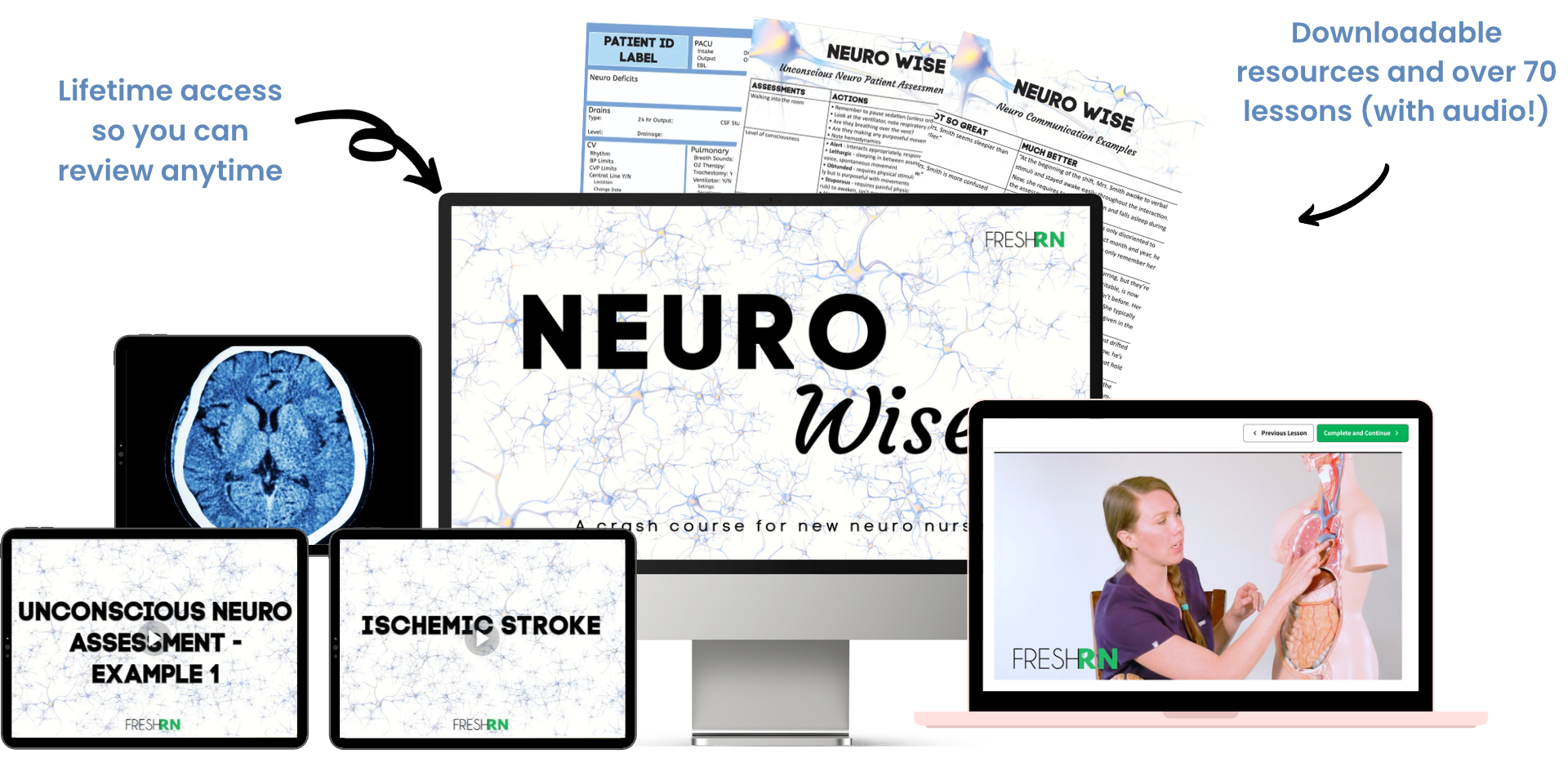
Here’s exactly what you get inside Neuro Wise:
- 70+ lessons using text, audio, video, and downloadable resources
- Video demonstrations of neuro anatomy, assessments, and common disease processes
- Printable checklists, worksheets, charts, and reference tools you can come back to later
- Pre- and post-tests with rationales to help you check what’s actually sticking
- Sample CT scans so you can start connecting the pathology to what it actually looks like
- Talking points and communication guidance for challenging moments
- Practical tips, unwritten rules, nurse hacks, and bedside context from nurses who have actually worked in neuro
Hear what some of our learners have to say about Neuro Wise!
Here's the entire course curriculum:
- Ischemic Stroke (5:29)
- Subarachnoid Hemorrhage (5:57)
- Intraventricular Hemorrhage (2:04)
- Intracerebral Hemorrhage (8:34)
- Epidural Hematoma
- Subdural Hematoma
- Brain Tumors
- Hydrocephalus
- Spinal Injuries
- Central Nervous System Infections
- Seizures & Status Epilepticus
- Guillain Barré Syndrome (GBS)
- Myasthenia Gravis
- Amyotrophic Lateral Sclerosis (ALS), Huntington's Disease and Multiple Sclerosis (MS)
- Rule Out TIA
Get This Course + the Entire FreshRN Library with FreshRN All-Access
One membership. Our ENTIRE library of FreshRN courses.
SEE EVERYTHING INCLUDED + JOIN ALL-ACCESS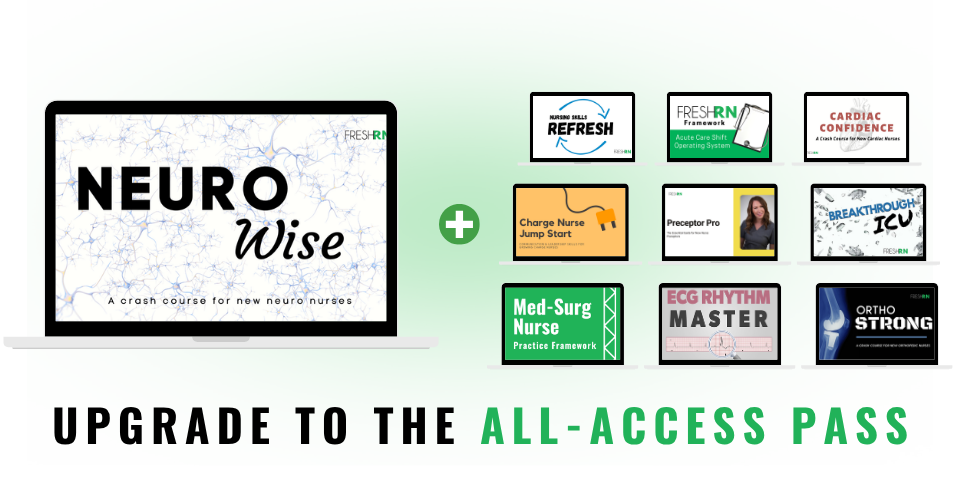
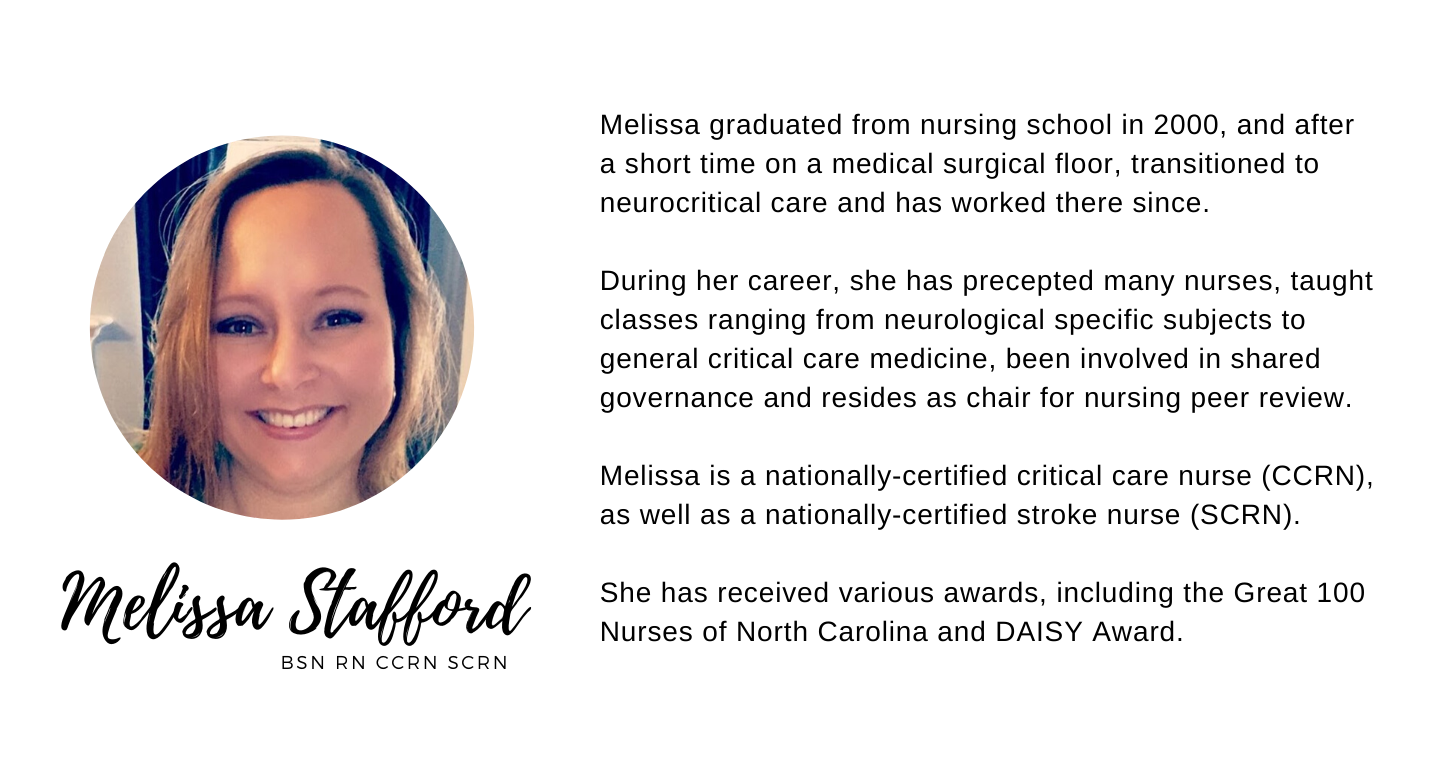
Meet Your Instructors

Frequently Asked Questions
When does the course start?
Whenever you want! Neuro Wise is completely self-paced, so you can start immediately and move through the lessons on your own schedule.
How long do I have access to Neuro Wise?
Once purchased, you have lifetime access to Neuro Wise and can revisit the lessons and resources whenever you need them.
What if I’m unhappy with the course?
We would never want you to be unhappy! You can request a full refund within 14 days of purchase. The only refund requirements are: The refund must be requested and issued within 14 days of purchase (please allow 2-3 business days for refunds to be processed), and less than 50% of the course must be completed.
Does Neuro Wise include contact hours?
No. Neuro Wise was previously approved for contact hours, but we chose not to renew them because very few learners actually claimed them.
How much neuro experience do I need before taking this?
None. Neuro Wise was built with nurses who are new to acute care neuro in mind, so you don't need to already feel comfortable with neuro before starting.
You don’t need to soldier your way through neuro.
You simply need to understand how the pieces connect.
Why the sodium matters.
Why that assessment change matters.
Why this patient has different blood pressure goals than the one next door.
Why you’re giving that medication, watching that drain, calling the provider, or suddenly very interested in what the CT shows.
That’s when neuro starts feeling less like a giant pile of facts and more like a picture you can actually make sense of.
Neuro Wise was built to help you get there.

Our money-back guarantee
Try the program risk-free for 14 days
Give the course a try for two weeks, and if it's not moving the needle for you, send us an email, and we'll issue a refund. No explanation required. (Full refund policy details in FAQ.)